Fit the space you have.
Map the pipes. Measure each clear pocket. Then choose storage you can easily take back out.
An under-sink cabinet is several small storage spaces interrupted by plumbing. Measure those spaces separately before choosing bins or shelves. A cabinet’s outside width tells you little about whether an organizer can pass through the door, sit beside the drain, and come back out with bottles inside.
For renters, start with removable pieces and a layout you can empty easily for maintenance. The measuring method and storage choices below are Small Space Project’s editorial planning suggestions. They do not establish plumbing clearances or guarantee that a particular organizer will fit.
Map the plumbing before measuring
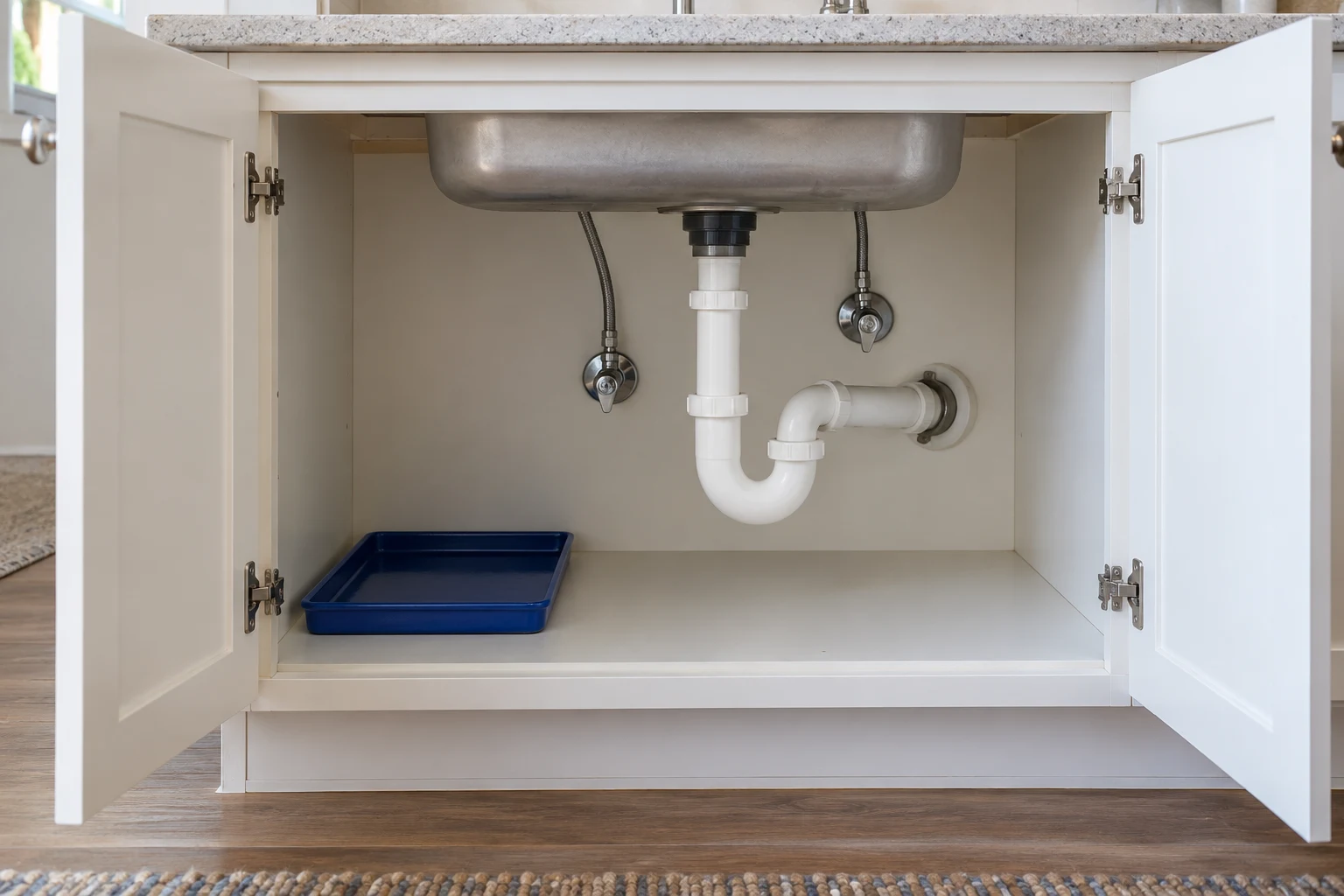
Empty the cabinet and take a photo. Locate the drain’s curved section, supply lines, shutoff handles, and any disposal, filter, hoses, or electrical connections. Mark their positions on a simple sketch viewed from the front and from above.
Fixture shutoff valves control water to individual plumbing fixtures, allowing maintenance without shutting off the entire home’s supply. That function is why our layout starts with a clear route to the handles. If you cannot identify yours, ask building maintenance to show you. BrassCraft’s explanation of fixture shutoff valves
As an editorial access check, reach toward each handle without operating it. Plan room for your hand and the handle’s movement, following any applicable equipment instructions. Keep the drain connections visible where practical, and choose storage that can be removed without moving plumbing. Report active leaks or damaged cabinet flooring to your landlord before adding storage.
Check the door opening, usable depth, clear height and movement path. The checklist below breaks those checks into the details to record.
Use this measurement checklist
Record dimensions in inches, and keep the sketch with your measurements:
Compare those measurements with the organizer’s complete assembled dimensions and installation instructions. Attachments can change the footprint: manufacturer specifications may give different depths with and without an accessory basket. YouCopia’s dimensional specifications
Choose storage by the space available
These are editorial options to test against your measurements:
| Your available space | Storage to consider | Fit check |
|---|---|---|
| Narrow pocket beside pipes | Slim removable bin or caddy | Can it come out loaded without touching supply lines? |
| Low space beneath a drain | Shallow tray | Can you lift out its contents and remove the tray? |
| Tall, clear side section | Freestanding tiered organizer | Will bottles fit beneath each shelf and clear the sink bowl? |
| Clear rectangular path to the opening | Pull-out organizer | Will the whole drawer clear hinges, frame, and plumbing throughout its travel? |
| Open area with room around it | Turntable | Can the loaded bottles complete a rotation without contact? |
| Unoccupied space behind a door | Door-mounted holder | Will the bracket fit and the loaded door close freely? |
For a rental, check installation requirements before buying. Some sliding organizers require screws. Follow the lease and obtain any needed permission for mounting. An expandable shelf still needs its legs, crossbars, and loaded shelves to fit around the actual obstructions.
Choose the contents before the final layout
Keep household cleaners in their original containers, follow label storage directions, and keep them out of children’s reach. EPA also advises childproof locks on low cabinets. If this cabinet cannot meet a product’s storage directions or your household’s access needs, store that product elsewhere. EPA’s household-product storage guidance
For a final editorial fit check, use empty boxes to represent proposed organizers. Close the doors, rehearse removing each box, and check your route to the valves. Replace a cramped arrangement with fewer, smaller pieces. Leave the sketch in your notes so future purchases do not gradually fill the access space you planned.
Sources & editorial method
This is a research-based planning guide, not a hands-on product review. Layout suggestions are editorial; no universal plumbing clearance or product fit is claimed.
- BrassCraft: fixture shutoff valve function
- YouCopia: assembled dimensions and accessory footprint
- EPA: Read the Label First (PDF)
Sources verified September 7, 2026. No affiliate links appear in this guide.