Top gap
The clear reveal between the door and frame where the bracket must pass.
An over-the-door organizer can match the door thickness and still rub the frame, miss the latch or bump the wall once it is loaded.
Try the 2-minute rehearsal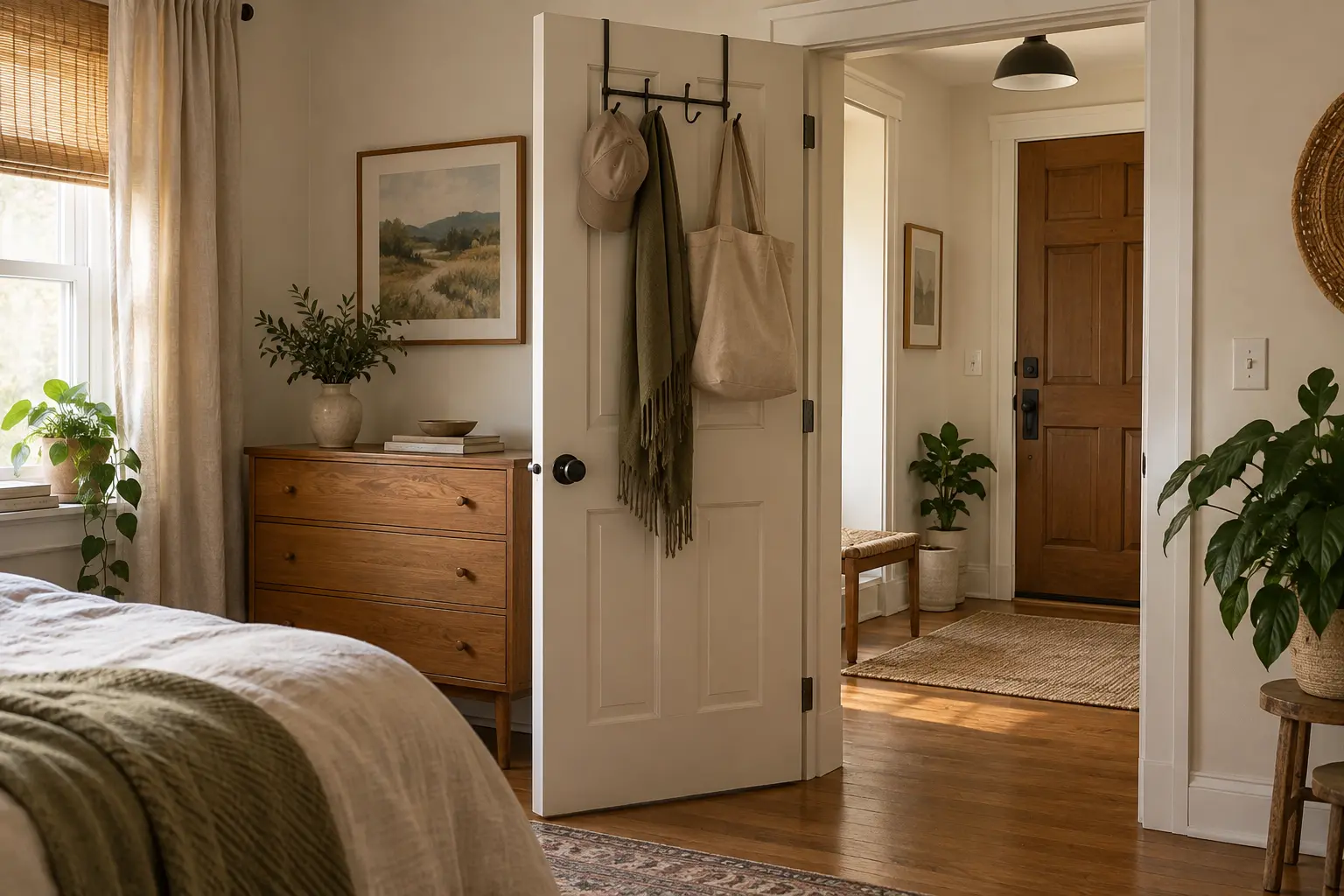
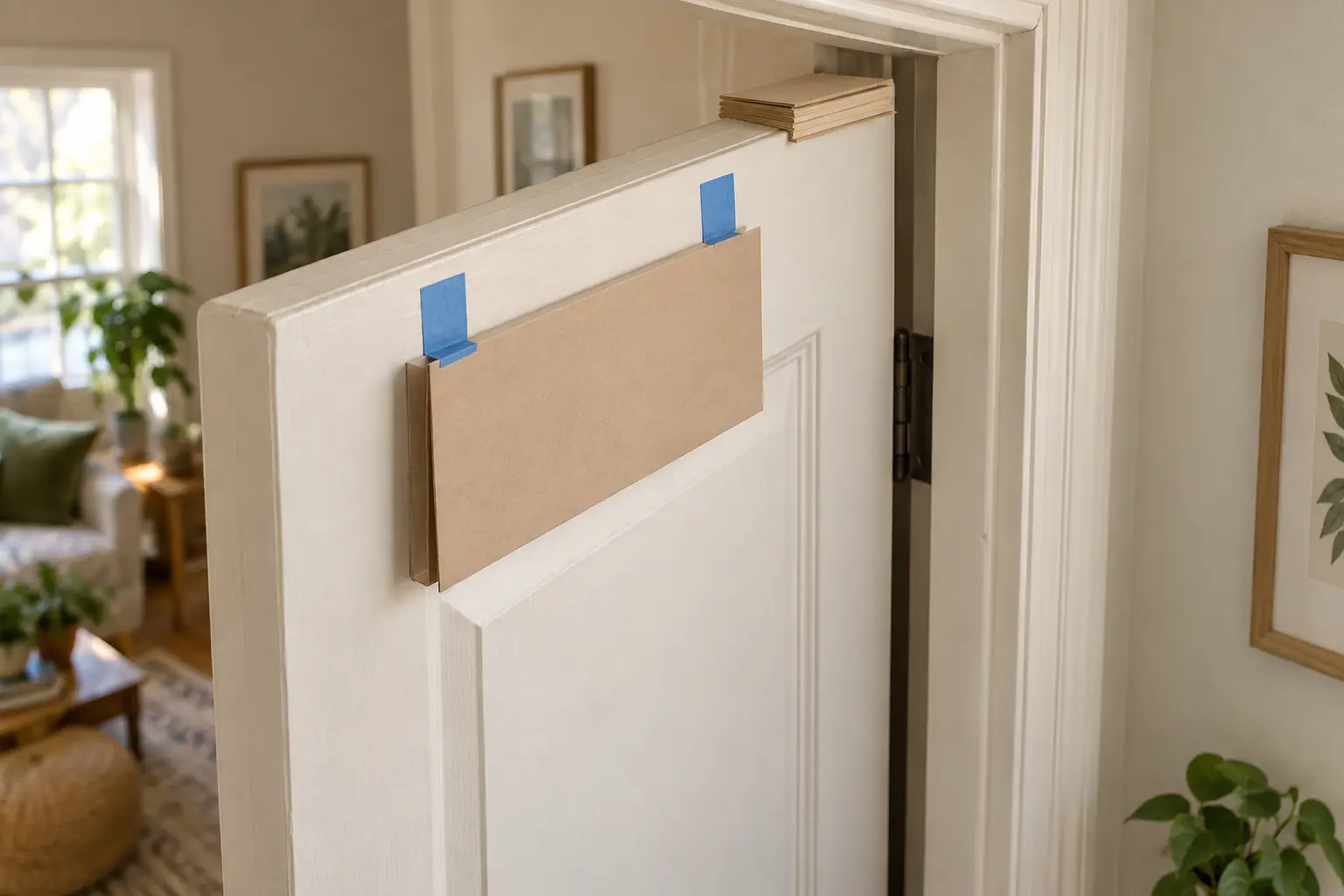
Find the maker's bracket or required-gap measurement. Do not guess it from a product photo.
Layer cardstock to that thickness and place it at the intended top position with removable painter's tape.
Close the door slowly. Stop at resistance; never squeeze or force the test through the frame.
Use an empty paper or cardboard rectangle to preview the organizer and its swing path.
Measure the closing path and the room around it—not only the slab.
The clear reveal between the door and frame where the bracket must pass.
The actual thickness at the hanging point, compared with the exact model's limit.
The door should close without rubbing and latch without extra pressure.
Add the depth of the largest everyday item—not just the empty organizer.
Check nearby walls, trim, handles, furniture and the movement of hanging items.
The frame may sit flat and appear stable while the door is still.
Bags, bottles or towels project farther, shift the balance and may swing as the door moves.
Do not turn a per-hook limit into a total capacity. The manufacturer may not provide a total organizer, hinge or door rating.
Up to 1.38 in door
The manufacturer lists a door-thickness limit of 3.5 cm (about 1.38 inches), a 5.98 kg load limit and a required 1/16-inch gap between door and frame. Those numbers still do not guarantee clearance for your trim, latch or loaded items.
Read the manufacturer page ↗14.25 × 4.25 × 23.75 in
Umbra lists 14 hooks and a 5 lb limit per hook. Its current page conflicts on maximum door thickness—1.5 inches in the description and 1.6 inches in a feature bullet—and does not publish a bracket-gauge or guaranteed closing-clearance figure.
Read the manufacturer page ↗Use the conservative figure when a listing conflicts, and verify the current exact variant before ordering. Overall depth is not a promise that the loaded unit will clear your wall or handle.
A bracket can rub paint, compress weather stripping or change how a marginal door latches. Avoid glass, damaged, unusually tight, exterior, weather-sealed or fire-rated doors unless the maker and property rules clearly permit the setup. If the door already sags or rubs, solve that first.
Install unloaded, close gently, then add a light load gradually. Stop if the bracket shifts, the door rubs, the latch changes or the hinges appear strained.
Manufacturer information checked September 8, 2026. This is a research-based planning guide, not a hands-on product review. We have not purchased or physically tested these organizers.
We make no universal fit, damage-free, stability, total-capacity, door-compatibility, current price, stock or durability claim.
Amazon links are ordinary product references without affiliate tags. Recheck the selected variant, current specifications, price and availability before any future affiliate placement.
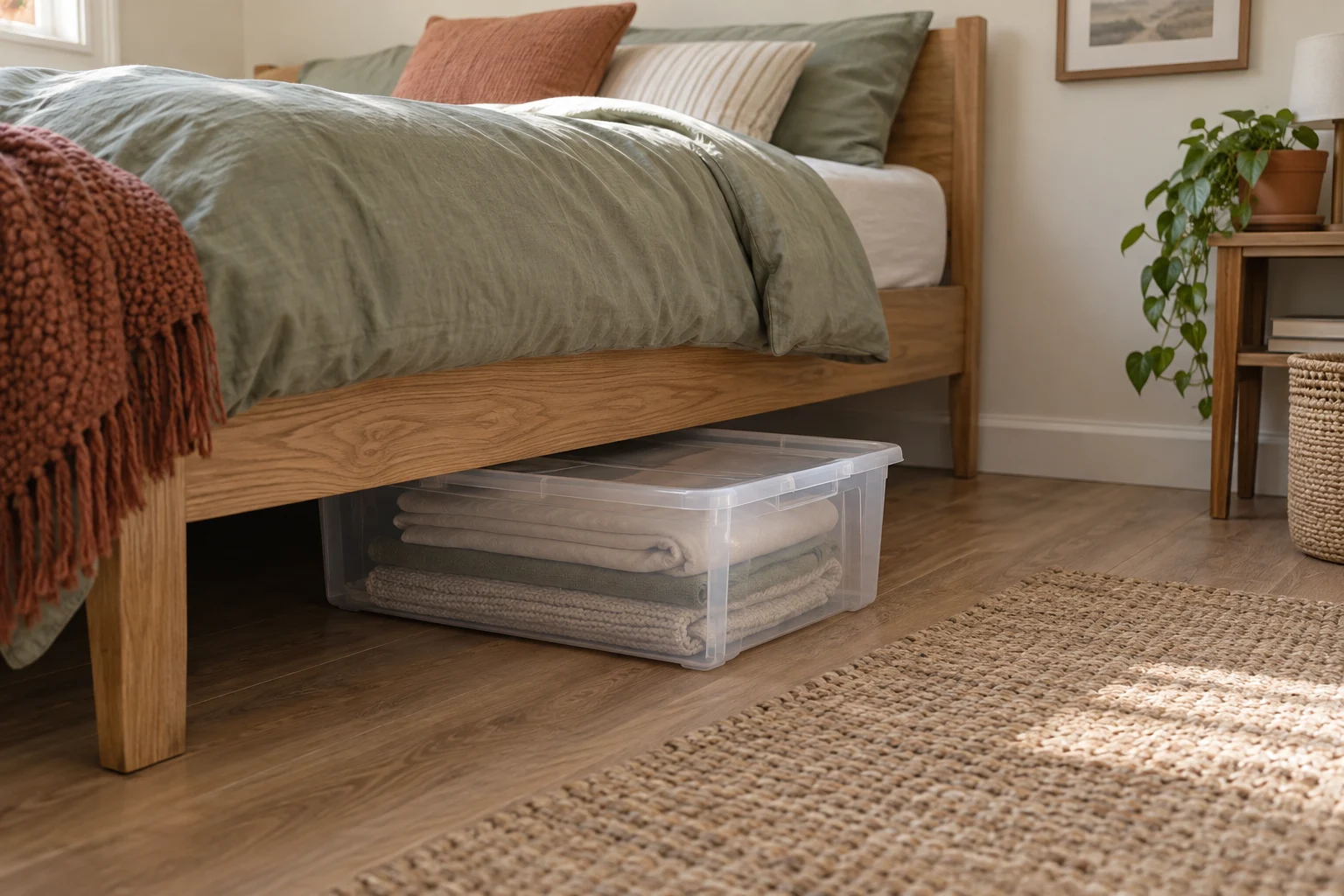
Measure the lowest point, opening and pull-out path before choosing a box.
Explore the guide ↗