Choose the space. Then the rack.
A fixed base suits a defined pocket. An expandable base offers more layout choices on a wider shelf. Both need room for your cookware and your hands.
Pulling one baking sheet from a pile should not mean unloading the entire cabinet. A divider rack changes how you reach your cookware: each piece has its own slot. But standing everything upright is useful only if the loaded arrangement fits your cabinet and leaves room to take things out.
This guide compares two current YouCopia Organizing Hero designs: the StoreMore Bakeware Rack and the expandable StoreMore Pan & Lid Rack. It uses manufacturer specifications, not hands-on testing. Our fit checks are editorial planning suggestions. Neither design is a universal solution for a small kitchen.
Start with what you want to store
Put your everyday pieces on the counter before choosing an organizer. Separate flat baking sheets and cutting boards from deeper pans, lids with projecting knobs, and pieces you rarely use. Think about the item you reach for most often: the goal is a layout that lets you remove it independently.
Look at the inside of the cabinet, then at its opening. A wide shelf behind a narrow door can accommodate an organizer that is awkward to load. A center stile, hinge or neighboring stack may also interrupt the route out. Sketch the usable area instead of treating the cabinet's exterior width as available storage.
Compare the two formats
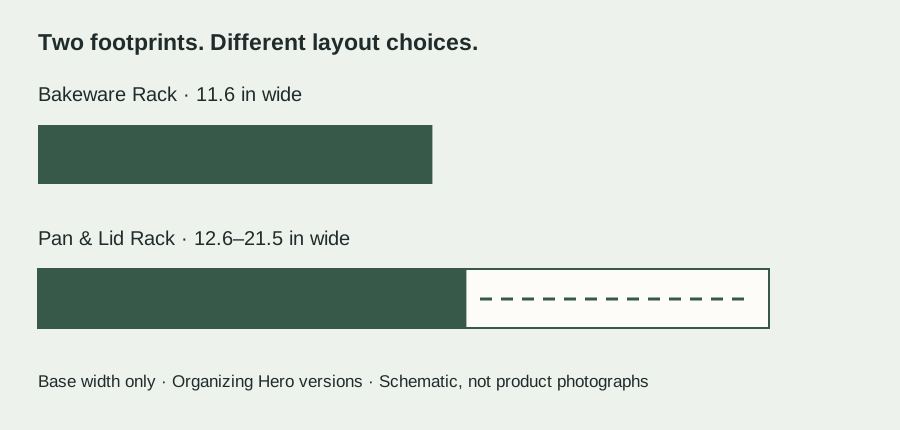
Dimensions below describe the organizers, including inserted dividers, before cookware is added. They apply to the speckled-white Organizing Hero versions, not older Classic models.
| Feature | StoreMore Bakeware Rack | StoreMore Pan & Lid Rack |
|---|---|---|
| Base width | 11.6 inches, fixed | 12.6–21.5 inches, expandable |
| Depth | 7.4 inches | 7.3 inches |
| Height with dividers | 6.4 inches | 6.3 inches |
| Adjustable dividers | 7 | 10 |
| Cabinet mounting | No mounting required | No mounting required |
Specifications and setup: YouCopia Bakeware Rack and YouCopia Pan & Lid Rack.
When the fixed rack makes sense
Consider the Bakeware Rack when you have a defined pocket of cabinet space and mainly want to separate flat pieces. The fixed footprint is a straightforward starting point for a paper template: mark the base on a sheet, then position it where you intend to keep the rack.
Now bring over the actual baking sheet or board. Check the space it needs above the template and the route through the opening. The rack's listed height is not the height of that loaded arrangement. If the cookware must tilt to come out, include that movement in your check rather than looking only at where it will stand.
When the expandable rack makes sense
Consider the Pan & Lid Rack when you want to distribute different pieces across a wider shelf. An adjustable base gives you another layout choice, but maximum extension is not a target. Decide how much room the cookware needs and what must remain beside it.
A pan handle can occupy more space than its round body suggests. A lid knob can complicate the neighboring slot. Test the intended orientation of each piece with your sketch and leave room to grip it. Count useful positions for your cookware, rather than assuming the number of dividers equals a guaranteed number of pans.
When to buy neither
Skip both if your sheets cannot stand under the shelf above, your preferred arrangement blocks other daily items, or reaching into the cabinet remains difficult. First try reducing the stack or moving rarely used bakeware to another suitable shelf. A new organizer is not automatically better than a smaller collection in an accessible spot.
These racks are also not substitutes for checking a cabinet shelf's capacity. Do not assume that separating heavy cookware changes what the shelf can support. If your storage problem is mostly large nesting pots, these two formats may not address it well.
Four checks before ordering
- Footprint: The selected rack fits the usable shelf space, with other stored items accounted for.
- Loaded height: The tallest sheet, board or lid clears the shelf above in its intended position.
- Removal path: The item you use most can come out without unloading its neighbors.
- Exact version: The product page matches the Organizing Hero model and dimensions in this guide.
Choose the layout that solves your particular access problem. The wider organizer is useful only when you need and can use its extra span.
Sources and product references
Manufacturer specifications checked September 7, 2026. We have not purchased or physically tested these organizers. No current price, stock level, delivery promise or durability result is asserted.
- Manufacturer: StoreMore Bakeware Rack
- Manufacturer: StoreMore Pan & Lid Rack
- Amazon product reference: Bakeware Rack, B0DNG6P64J
- Amazon product reference: Pan & Lid Rack, B0DNG7QJDQ
These are ordinary reference links. This draft contains no affiliate links.